
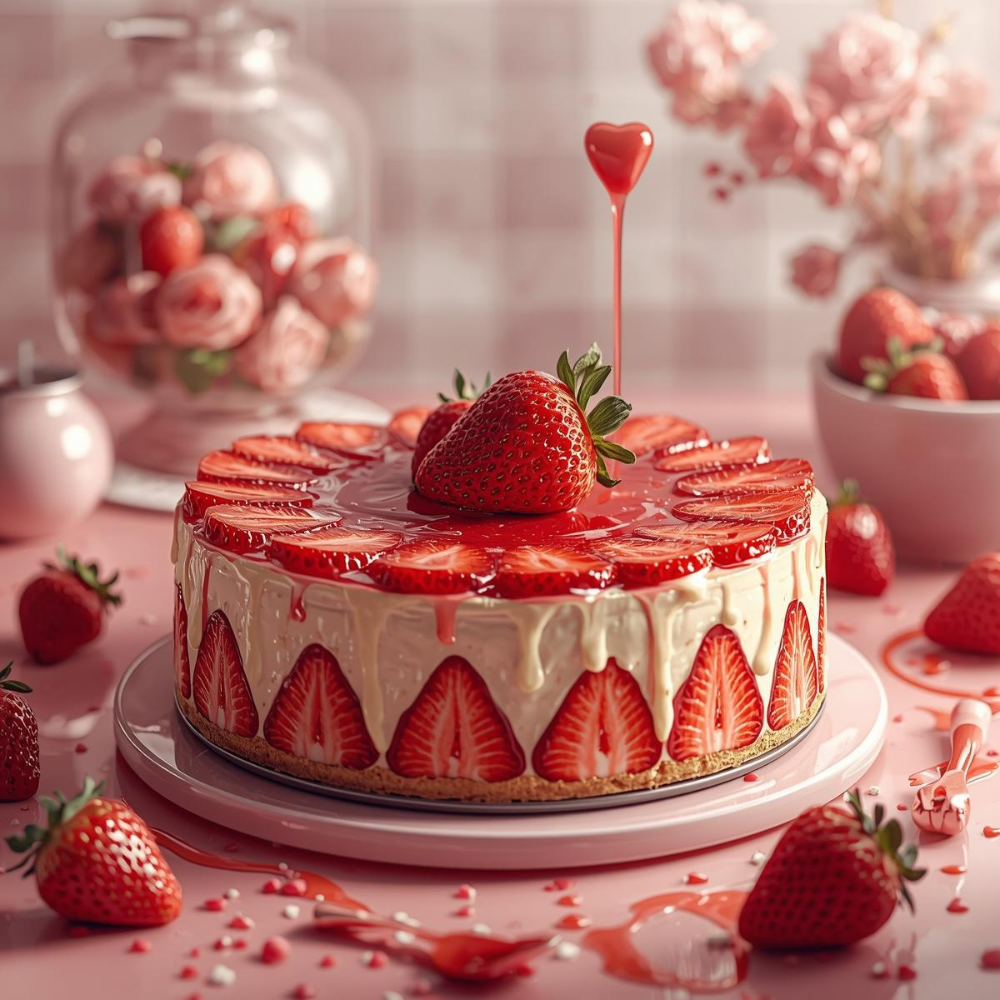
I’ve made countless desserts over the years, but strawberry cheesecake remains one of those rare creations that still feels personal every time I prepare it. There’s something about the balance—the gentle tang of cream cheese, the buttery depth of the crust, and the bright, almost nostalgic sweetness of strawberries—that keeps it from ever becoming routine. When I make a strawberry cheesecake, I’m not just following a recipe; I’m orchestrating textures, temperatures, and flavors with intent.
Let me walk you through how I approach it, step by step, as someone who has learned that the difference between a good cheesecake and a memorable one lies in the details most people rush past.
Understanding the Foundation
Before I even touch an ingredient, I remind myself that cheesecake is not a cake in the traditional sense—it’s a custard. That means it demands respect for precision, gentle handling, and patience.
A proper strawberry cheesecake has three essential components:
- The crust
- The filling
- The topping
Each one must stand on its own, yet complement the others seamlessly.
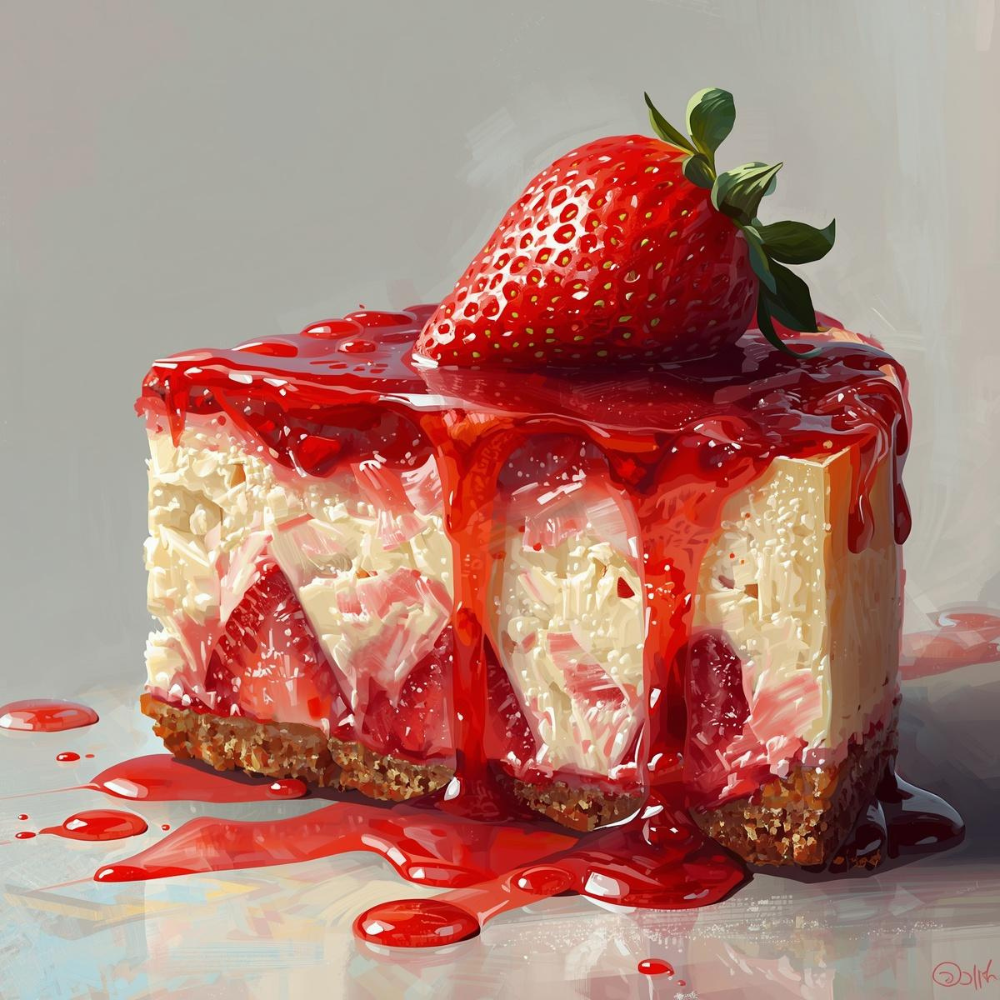
Crafting the Perfect Crust
I always begin with the crust because it needs time to cool before the filling goes in.
Ingredients I Use
- Digestive biscuits or graham crackers
- Melted butter
- A touch of sugar (optional, depending on the biscuit sweetness)
My Process
I don’t just crush the biscuits—I control the texture. Too fine, and the crust becomes dense and overly compact. Too coarse, and it won’t hold together. I aim for something resembling damp sand.
Once mixed with melted butter, I press it into the pan. But here’s where experience matters: I don’t just push it down randomly. I start from the center and work outward, ensuring even thickness. I also bring it slightly up the sides, creating a subtle edge that frames the filling.
Then I bake it briefly—not to cook it fully, but to set it. This step adds a toasted flavor and prevents sogginess later. I let it cool completely before moving on.
Building the Cheesecake Filling
This is where most people make mistakes. Cheesecake filling is deceptively simple, but it’s sensitive to temperature, mixing technique, and timing.
Ingredients I Trust
- Full-fat cream cheese (always at room temperature)
- Sugar
- Eggs
- Fresh cream
- Vanilla extract
- A hint of lemon zest or juice (for brightness)
My Method
1. Cream Cheese First—Always
I start by beating the cream cheese alone until it’s completely smooth. If there’s even a slight lump at this stage, it will remain in the final cheesecake. I don’t rush this step.
2. Sugar Integration
I add sugar gradually, allowing it to dissolve into the cream cheese. This creates a silky base and prevents graininess.
3. Eggs—Handled Gently
Eggs are where many cheesecakes go wrong. Overmixing at this stage incorporates too much air, which causes cracks later.
I add eggs one at a time, mixing just until incorporated. No whipping, no aggressive beating—just calm, controlled blending.
4. Flavor and Cream
Vanilla goes in next, followed by cream. The cream softens the texture, making the cheesecake luxurious rather than dense.
If I’m using lemon zest or juice, I add it sparingly. It shouldn’t taste citrusy—it should simply lift the flavor.
The Pour and the Bath
Once the filling is ready, I pour it over the cooled crust. I tap the pan gently on the counter to release any trapped air bubbles. This small step makes a noticeable difference in texture.
The Water Bath (Non-Negotiable for Me)
I always bake cheesecake in a water bath. It ensures even heat distribution and prevents cracking.
I wrap the outside of the springform pan in foil to prevent leaks, then place it in a larger pan filled with hot water.
Baking with Precision
I bake the cheesecake at a moderate temperature—not too high. Cheesecake doesn’t like aggression.
What I Watch For
I don’t rely solely on time. Instead, I observe:
- The edges should be set
- The center should still have a slight wobble
If the center is fully firm in the oven, it’s already overbaked.
Cooling: The Hidden Step Most Ignore
This is where patience separates amateurs from professionals.
When baking is done, I don’t take the cheesecake out immediately. I turn off the oven, crack the door open, and let it cool slowly inside. This gradual cooling prevents sudden temperature changes that cause cracks.
After that, it comes out to cool completely at room temperature. Only then do I refrigerate it—preferably overnight.
Cheesecake is not meant to be rushed. It matures in the fridge, developing its final texture and flavor.
Preparing the Strawberry Topping
Now comes the part that gives this dessert its identity.
Ingredients I Use
- Fresh strawberries (ripe but firm)
- Sugar
- Lemon juice
- A little cornstarch (optional, for thickening)
My Approach
I never rely entirely on raw strawberries or entirely on cooked ones—I combine both.
1. The Sauce Base
I cook a portion of the strawberries with sugar and lemon juice until they break down into a vibrant sauce. If needed, I thicken it slightly.
2. Fresh Strawberry Addition
Then I fold in freshly sliced strawberries. This creates contrast—some fruit is soft and jammy, while some remains fresh and juicy.
Assembling the Final Cheesecake
Once the cheesecake is fully chilled, I remove it from the pan carefully.
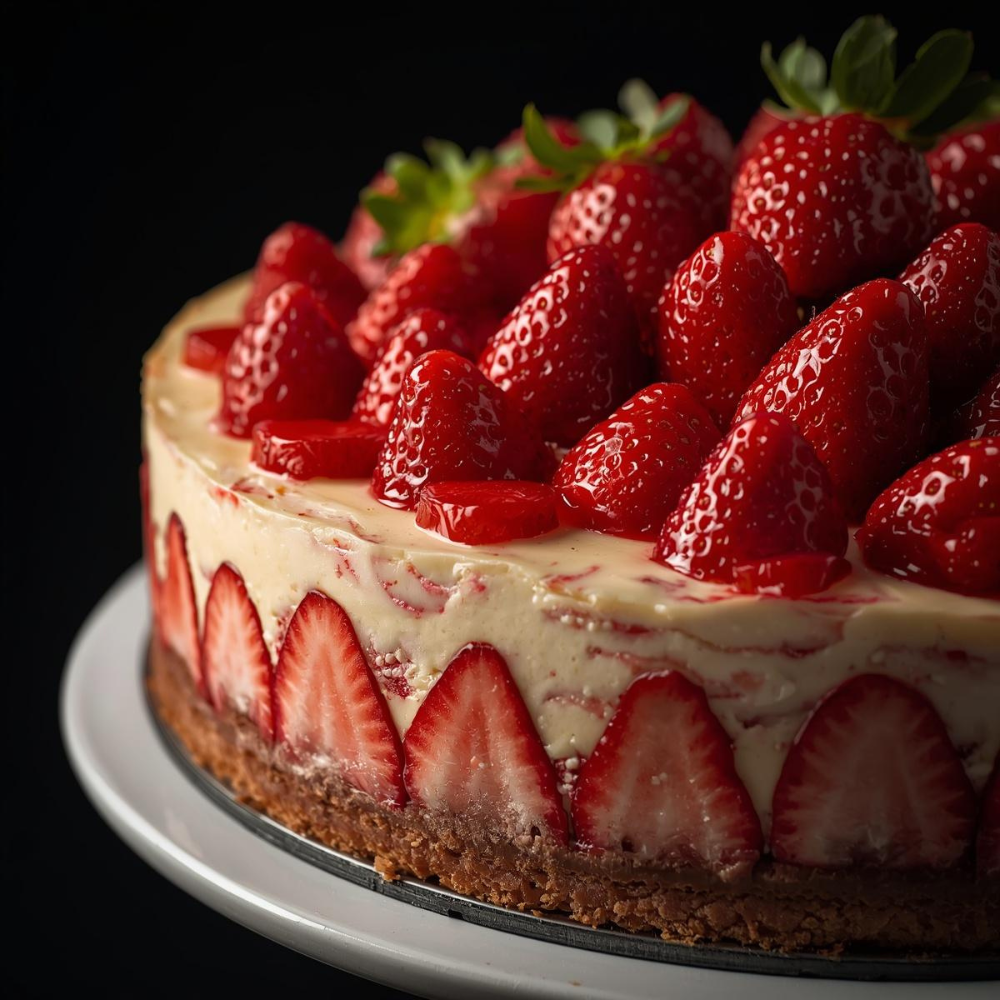
I don’t rush the topping. I spoon the strawberry mixture over the top, letting it cascade naturally rather than forcing it into place. Sometimes I leave a slight border around the edge for a cleaner presentation.
Texture and Flavor: What I Aim For
A well-made strawberry cheesecake should deliver:
- A crust that is firm but not hard
- A filling that is creamy, smooth, and slightly tangy
- A topping that is bright, fresh, and balanced
No single element should overpower the others.
Common Mistakes I Avoid
Over the years, I’ve seen—and corrected—every cheesecake mistake imaginable:
- Cold ingredients: They lead to lumps
- Overmixing eggs: Causes cracks
- Skipping the water bath: Results in uneven baking
- Overbaking: Leads to dryness
- Rushing the cooling process: Causes structural issues
Avoiding these isn’t complicated—it just requires discipline.
My Personal Touches
Even after mastering the classic version, I like to refine small details:
- Sometimes I add a thin layer of strawberry compote inside the cheesecake for a surprise element
- Occasionally, I infuse the crust with a hint of cinnamon or almond
- I adjust sweetness depending on the strawberries—nature dictates the balance, not a fixed formula
Serving the Cheesecake
When it’s time to serve, I use a warm knife for clean slices. I wipe the blade between cuts—this keeps each slice sharp and elegant.
I prefer serving it slightly chilled, not ice-cold. At that temperature, the flavors are more expressive and the texture is at its best.
Final Thoughts
Making strawberry cheesecake at a high level isn’t about complexity—it’s about intention. Every step, from crushing the biscuits to slicing the final piece, contributes to the result.
As a chef, I’ve learned that desserts like this reward patience more than creativity. You don’t need to reinvent cheesecake to make it exceptional—you just need to respect it.
And when you do, what you get is more than a dessert. You get something that feels crafted, balanced, and deeply satisfying—every single time.
Read also: How to make honey chili potato ?