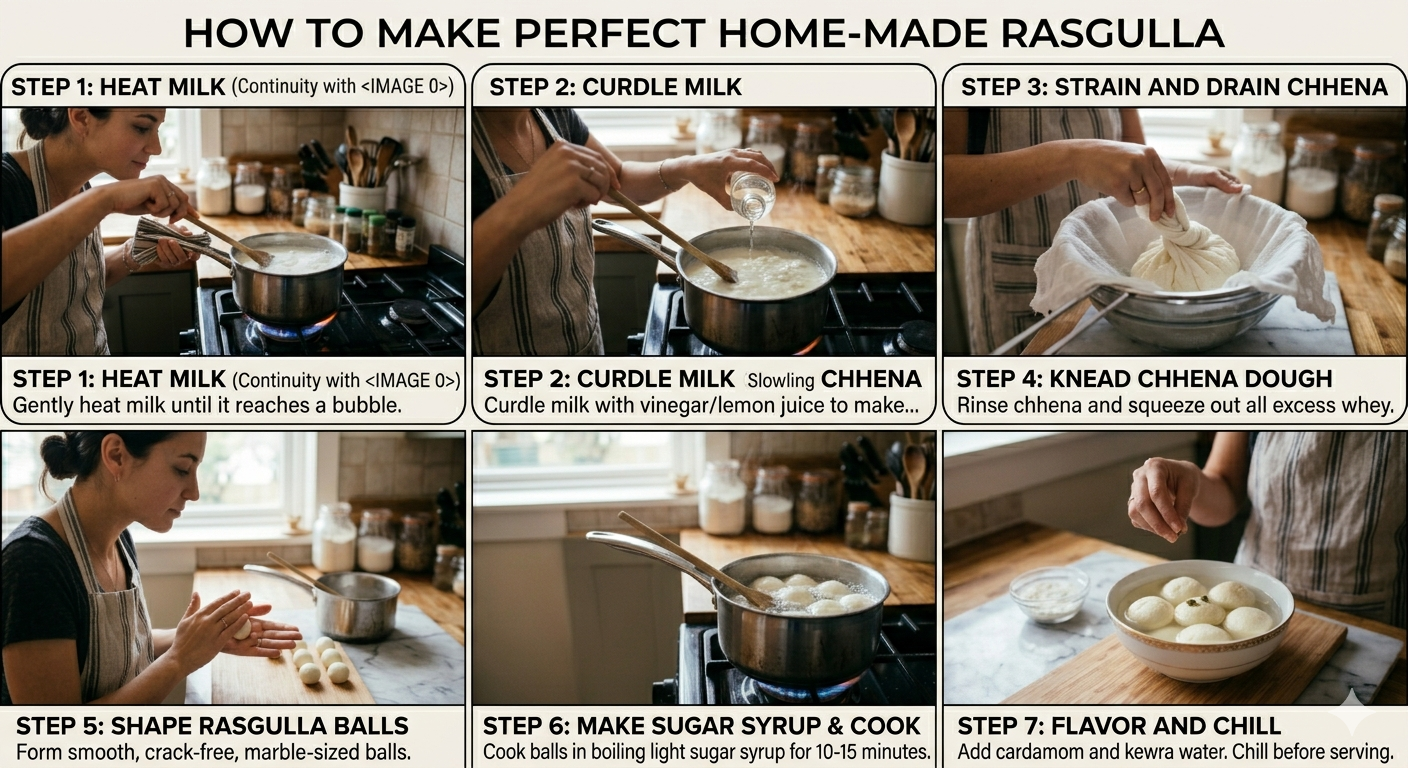
Rasgulla is one of the most famous Indian sweets, loved for its soft texture, juicy sweetness, and spongy feel. It is made mainly from fresh chenna (Indian cottage cheese) and sugar syrup. Rasgulla is especially popular in states like West Bengal and Odisha and is served during festivals, celebrations, weddings, and family gatherings.
Making rasgulla at home may look difficult at first, but with the right method and patience, you can prepare soft and delicious rasgullas easily. The secret lies in preparing smooth chenna, kneading properly, and cooking in the correct sugar syrup.
This article explains the complete process of making rasgulla step by step in simple language.
Ingredients Required
For Making Chenna
- 1 liter full cream milk
- 2 tablespoons lemon juice or vinegar
- 2 cups cold water
For Sugar Syrup
- 1½ cups sugar
- 4 cups water
- 2–3 cardamom pods (optional)
- 1 teaspoon rose water or kewra water (optional)
Step 1: Boiling the Milk
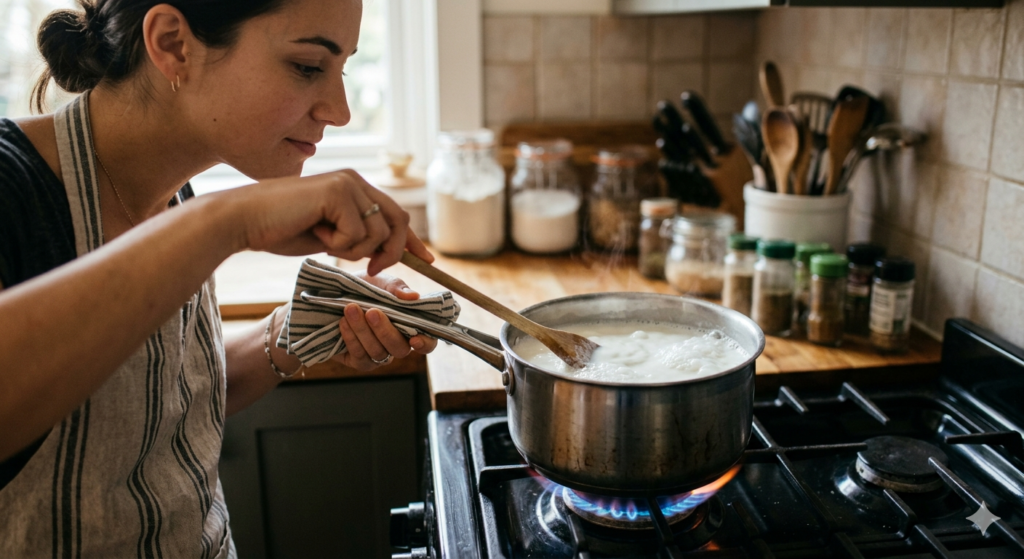
Take a large heavy-bottom pan and pour 1 liter of full cream milk into it. Always use fresh full-fat milk because it gives soft and rich chenna.
Turn on medium flame and let the milk boil slowly. Stir occasionally so the milk does not stick to the bottom of the pan.
When the milk starts boiling completely, reduce the flame to low.
Step 2: Curdling the Milk
Mix lemon juice with a little water before adding it to the milk. Slowly pour the lemon mixture into the boiling milk while stirring gently.
After a few seconds, the milk will start separating into greenish water and white curdled milk solids. These milk solids are called chenna.
If the milk does not curdle completely, add a little more lemon juice.
Once the milk is fully curdled, immediately switch off the flame.
Step 3: Washing the Chenna
Place a cotton cloth or muslin cloth over a strainer and pour the curdled milk into it carefully.
The water will drain away, and the chenna will remain in the cloth.
Now wash the chenna under cold running water. This step is very important because it removes the sour taste of lemon or vinegar.
After washing, squeeze gently to remove extra water.
Tie the cloth and hang it for about 30–40 minutes. Do not dry the chenna completely. It should remain slightly moist.
Step 4: Kneading the Chenna
Take the prepared chenna onto a clean plate or smooth surface.
Now start kneading it with the palm of your hand. This is one of the most important steps in making rasgulla.
Knead for around 8–10 minutes until the chenna becomes soft, smooth, and slightly greasy.
There should be no grains or lumps in the mixture.
If the dough becomes too dry, rasgullas will turn hard. If too wet, they may break while cooking.
The final dough should feel smooth and soft.
Step 5: Making Rasgulla Balls
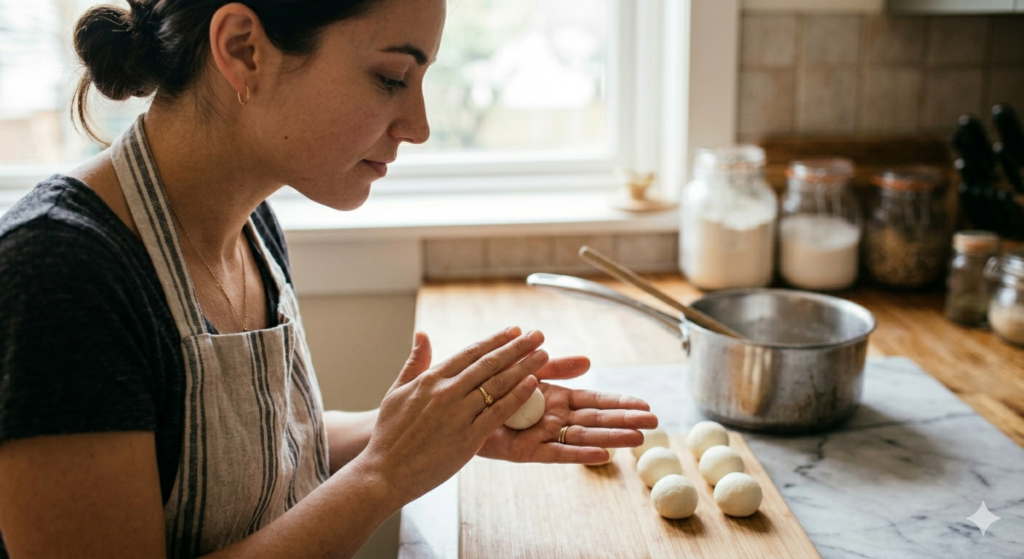
Take small portions from the dough and roll them gently between your palms.
Make smooth balls without cracks. Cracks can cause rasgullas to break during cooking.
Do not make very large balls because rasgullas expand while boiling in sugar syrup.
Prepare all balls and keep them aside.
Step 6: Preparing Sugar Syrup
Take a deep and wide pan or pressure cooker.
Add 1½ cups sugar and 4 cups water.
Heat the mixture on medium flame and stir until the sugar dissolves completely.
You can add cardamom pods for extra flavor.
The syrup should be thin, not thick.
Once the syrup starts boiling, it is ready for cooking the rasgullas.
Step 7: Cooking the Rasgullas
Carefully drop the prepared balls into the boiling sugar syrup.
Cover the pan with a lid.
Cook on medium-high flame for about 15–20 minutes.
During cooking, the rasgullas will expand and become double in size.
You can sprinkle a little warm water if the syrup becomes too thick during boiling.
Do not overcrowd the pan because rasgullas need space to expand properly.
Avoid stirring too much, as they are delicate and may break.
Step 8: Checking Whether Rasgullas Are Ready
After 15–20 minutes, switch off the flame.
Take one rasgulla in a spoon and press it gently.
If it springs back to shape, it is cooked properly.
If it feels rubbery or hard, it may have been overcooked or the chenna was too dry.
Allow the rasgullas to cool completely in the syrup.
Step 9: Flavoring and Serving
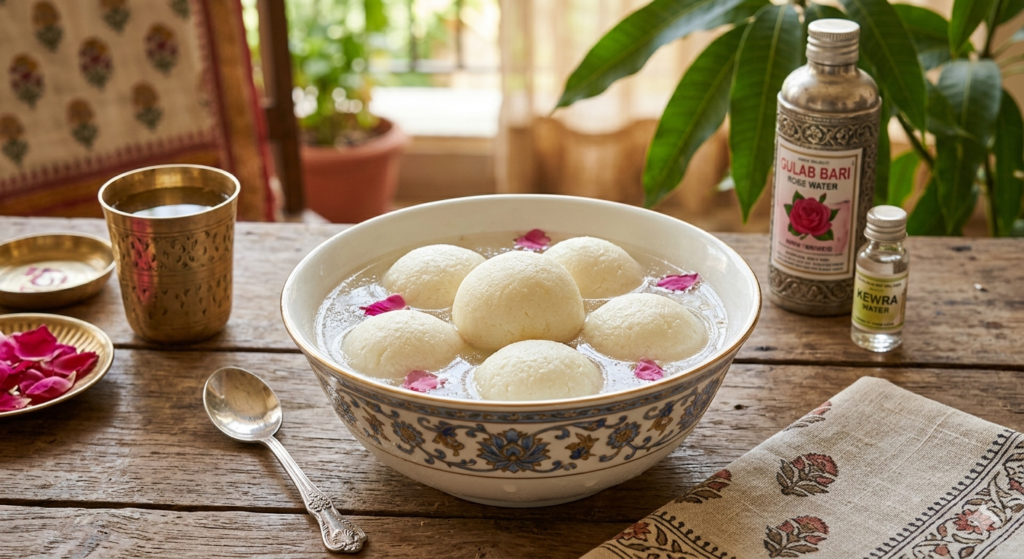
You can add rose water or kewra water once the rasgullas cool slightly.
Refrigerate for a few hours before serving for best taste.
Serve chilled or at room temperature.
Soft rasgullas soaked in cold syrup taste extremely refreshing during summer.
Important Tips for Soft Rasgullas
Use Full Cream Milk
Full-fat milk produces soft and rich chenna. Toned or skimmed milk may give hard rasgullas.
Do Not Overdry Chenna
The chenna should have slight moisture. Very dry chenna makes rasgullas hard.
Knead Properly
Proper kneading creates smooth texture and softness.
Sugar Syrup Must Be Thin
A thick syrup prevents rasgullas from expanding properly.
Cook on Correct Flame
Too low flame makes rasgullas dense, while too high flame may break them.
Common Mistakes While Making Rasgulla
Rasgullas Become Hard
This happens when:
- Chenna is dry
- Kneading is insufficient
- Syrup is too thick
Rasgullas Break in Syrup
This happens when:
- Dough is too wet
- Balls have cracks
- Syrup is not boiling properly
Rubbery Texture
Overcooking often causes rubbery rasgullas.
Different Variations of Rasgulla
Sponge Rasgulla
Extra soft and airy version cooked carefully in light syrup.
Rajbhog
A larger version of rasgulla filled with dry fruits and saffron.
Kesar Rasgulla
Prepared with saffron for rich flavor and golden color.
Angoori Rasgulla
Mini-sized rasgullas served in desserts or rabri.
Nutritional Information
Rasgulla mainly contains:
- Milk protein
- Sugar
- Calcium
- Carbohydrates
It provides quick energy because of sugar syrup. Since it is made from milk, it also contains protein and calcium.
However, it should be eaten in moderation because it is a sweet dessert.
Cultural Importance of Rasgulla
Rasgulla holds an important place in Indian culture and celebrations. It is commonly offered during:
- Festivals
- Weddings
- Birthday parties
- Religious ceremonies
In many Indian homes, guests are welcomed with sweets like rasgulla.
The sweet is also famous internationally and represents traditional Indian dessert culture.
Storage Tips
- Store rasgullas in the refrigerator.
- Keep them immersed in syrup to maintain softness.
- Best consumed within 3–4 days.
Do not freeze because freezing can spoil the texture
also read :How to Make a Traditional Rajasthani Thali
Leave a Reply