
Starting a business used to mean renting a commercial space, buying expensive machinery, hiring a large workforce, and risking life savings. Today, the entrepreneurial landscape in India has undergone a massive shift. Thanks to high internet penetration, a thriving digital ecosystem, and changing consumer behaviors, it is completely feasible to launch a highly profitable venture with a capital of less than ₹1,00 Lakh ($₹1,00,000$).
For beginners, a tight budget is actually a powerful guardrail. It forces you to focus on high-margin, low-overhead models where your skills, creativity, and execution matter far more than a large bank balance.
If you are ready to take the entrepreneurial plunge, here are 10 highly profitable business ideas in India that you can start for under ₹1 Lakh, detailed with setup costs, profit margins, and step-by-step strategies.
Read also :- The 10 Most Important Skills for Students in the Digital Age
1. Home-Based Tiffin & Cloud Kitchen Service
With millions of students and corporate professionals relocating to tier-1 and tier-2 cities, the craving for simple, hygienic, “ghar ka khana” (home-cooked food) is at an all-time high. A home tiffin service or micro-cloud kitchen allows you to monetize your culinary skills straight from your existing kitchen.
- Initial Investment: ₹30,000 – ₹50,000 (For commercial-grade raw ingredients, high-quality disposable packaging, and basic marketing).
- Target Audience: Office goers, college students living in hostels/PGs, and busy families.
- Profit Margin: 35% – 50%
How to Get Started
Instead of offering a massive, complicated menu, start with a highly focused niche—such as a healthy, low-oil lunch thali or regional specialties (e.g., authentic Gujarati or South Indian meals). Partner with local food delivery platforms like Zomato and Swiggy, or manage your own localized deliveries using WhatsApp Business groups to save on platform commissions.
Crucial Compliance: Since you are handling food, securing a basic FSSAI registration is mandatory and costs very little.
2. Digital Marketing & Social Media Management Agency
Virtually every local business—from neighborhood gyms and boutiques to cafes and doctors—needs a strong online presence to survive. However, most small business owners lack the time or technical expertise to manage their digital profiles. If you understand how algorithms, content creation, and local ads work, you can easily package this as a service.
- Initial Investment: ₹20,000 – ₹40,000 (For a decent laptop, high-speed internet connection, and premium subscriptions to tools like Canva, Buffer, or Loom).
- Target Audience: Local MSMEs, retail stores, and independent professionals.
- Profit Margin: 70% – 80% (Very high ROI since your primary inventory is your skills).
How to Get Started
Begin by auditing local businesses in your area. Approach them with a concrete proposal: “I will handle your Instagram page, create 3 reels a week, and manage your Google Business Profile for ₹10,000 a month.” Securing just 4 to 5 retainer clients can comfortably cross a revenue of ₹50,000 monthly with almost zero operational costs.
3. Dropshipping & E-commerce Reselling
The traditional retail model requires you to buy inventory upfront, store it, and hope it sells. Dropshipping completely eliminates this risk. In a dropshipping model, you showcase products on your online store; when a customer makes a purchase, the third-party supplier ships the product directly to them. You never touch the inventory.
- Initial Investment: ₹40,000 – ₹70,000 (For Shopify store hosting, domain registration, and targeted Meta/Google advertisements).
- Target Audience: Tech-savvy online shoppers looking for niche products (e.g., unique home decor, custom phone cases, or aesthetic organizers).
- Profit Margin: 20% – 35%
How to Get Started
Identify winning, high-demand products using platforms like IndiaMART or international directories (while filtering for reliable local shipping suppliers). Build a clean, trustworthy website via Shopify. Allocate the bulk of your ₹1 Lakh budget to micro-targeted Instagram and Facebook ads to drive targeted traffic to your store.
4. Custom Apparel Printing (Print-on-Demand)
Customized fashion is a massive trend among Indian youth, corporate teams, and college groups. Custom t-shirts, hoodies, and tote bags are consistently in high demand for events, branding, or personal style expression.
- Initial Investment: ₹60,000 – ₹90,000 (For a high-quality semi-commercial heat press machine, a basic plotter/cutter, and initial blanks/apparel stock).
- Target Audience: College clubs, local corporate teams, and Gen-Z consumers.
- Profit Margin: 40% – 60%
How to Get Started
You don’t need to manufacture the clothing yourself. Buy high-quality plain cotton t-shirts in bulk from wholesale hubs like Tirupur or Ahmedabad. Use your heat press machine to print custom vinyl or sublimation designs as orders come in. Marketing your designs heavily on Instagram and leveraging localized college campus ambassadors can jumpstart your sales velocity.
5. Mobile & Electronic Gadget Repair Services
India is one of the largest smartphone markets globally, and every single device eventually encounters an issue—whether it’s a cracked screen, battery degradation, or software glitch. A skill-based repair business is recession-proof and highly localized.
- Initial Investment: ₹50,000 – ₹80,000 (For professional mobile repair toolkit, diagnostic software licenses, component testing machines, and a small counter space or home-office setup).
- Target Audience: Smartphone and laptop users seeking quick, affordable alternatives to expensive authorized service centers.
- Profit Margin: 50% – 70%
How to Get Started
If you aren’t already skilled, invest in a 1-to-3-month professional mobile repairing certification course (which typically costs under ₹15,000). Set up a compact kiosk in a high-footfall market or offer a highly convenient “doorstep pickup and drop” repair service via local social media marketing. Word-of-mouth travels incredibly fast in this industry if your service is reliable and transparent.
6. Organic Microgreens & Urban Farming
With urban consumers turning heavily toward wellness and clean eating, the demand for organic, nutrient-dense superfoods has exploded. Microgreens (young vegetable greens that are approximately 1–3 inches tall) take less than two weeks to grow and can be farmed vertically inside a spare room or balcony.
- Initial Investment: ₹20,000 – ₹40,000 (For vertical grow racks, LED grow lights, high-quality organic seeds, coco-peat medium, and eco-friendly packaging).
- Target Audience: Health-conscious individuals, premium cafes, fine-dining restaurants, and salad bars.
- Profit Margin: 45% – 60%
How to Get Started
Start by growing easy, high-yield varieties like sunflower, radish, and mustard microgreens. Pitch your fresh harvest directly to local boutique cafes or offer weekly/monthly subscription boxes to fitness-conscious residents in premium residential high-rises.
7. Artisanal Handmade Candles & Organic Soaps
The lifestyle and gifting market in India is shifting away from mass-produced chemical items toward eco-friendly, aesthetically pleasing, and handmade alternatives. Specialized candles (soy wax, scented, decorative shapes) and organic cold-processed soaps are highly lucrative, especially during festive seasons like Diwali, weddings, and corporate gifting events.
- Initial Investment: ₹25,000 – ₹40,000 (For raw materials like soy/bee wax, organic oils, essential oils, natural colorants, unique silicone molds, and premium labeling).
- Target Audience: Urban homeowners, boutique hotels, and individuals looking for premium gifts.
- Profit Margin: 50% – 70%
How to Get Started
Perfect your formulation at home using free online tutorials. The real differentiator here is product presentation and storytelling. Build an aesthetic Instagram page showing behind-the-scenes processes, emphasize your use of “all-natural, toxin-free” ingredients, and tap into festive corporate gifting channels early.

8. Specialized Online Tutoring & Niche Coaching
Education is a top priority for Indian households. If you possess deep knowledge in an academic subject (like Class 11/12 Physics) or a specialized skill (such as coding, UI/UX design, or spoken English), you can scale a global teaching business from your living room.
- Initial Investment: ₹15,000 – ₹35,000 (For a high-quality webcam, a digital writing pen-tablet/stylus, a good microphone, and professional lighting).
- Target Audience: Students seeking conceptual clarity or professionals looking to upskill.
- Profit Margin: ~90% (Negligible recurring costs).
How to Get Started
Instead of trying to teach everything to everyone, dominate a specific niche. Create high-value, free educational shorts or reels on YouTube and Instagram to demonstrate your teaching style. Direct this traffic to paid interactive batch sessions using platforms like Zoom, Google Meet, or localized teaching apps.
9. Pet Grooming & Daycare Services
Pet ownership across urban India has seen an exponential rise. Pet parents treat their animals as family members and are highly willing to spend on their hygiene, grooming, and comfort. Because establishing a full commercial pet spa is expensive, starting as a mobile or home-based groomer is highly profitable.
- Initial Investment: ₹40,000 – ₹70,000 (For professional animal grooming kits, organic pet shampoos, blow dryers, clippers, and a short certification course in pet handling/grooming).
- Target Audience: Busy working professionals with pets.
- Profit Margin: 55% – 70%
How to Get Started
Offer a premium “At-Home Pet Grooming” service where you visit the client’s home to groom their pet in a comfortable environment. This completely eliminates your real estate rental costs. You can expand your revenue streams by offering home-based pet boarding/daycare when owners travel for weekends.
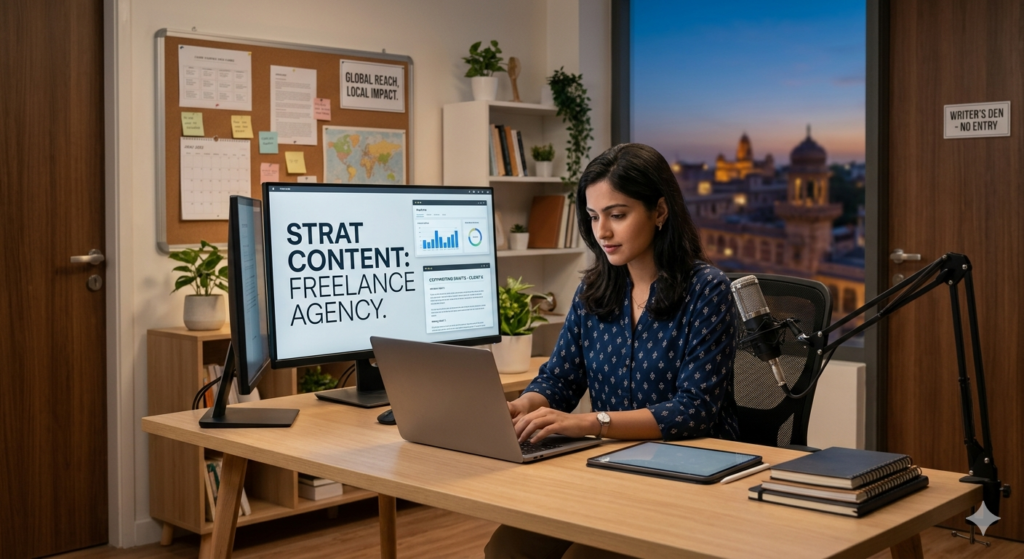
10. Freelance Content & Copywriting Agency
Content is the fuel that drives the modern internet economy. Businesses around the globe require well-researched blog posts, website copywriting, email newsletters, and high-converting ad scripts daily.
- Initial Investment: ₹20,000 – ₹30,000 (For a reliable laptop and subscription plans for grammar, SEO, and plagiarism-checking tools).
- Target Audience: B2B startups, marketing agencies, and international e-commerce brands.
- Profit Margin: 85% – 95%
How to Get Started
Build a solid portfolio by writing mock samples or offering pro-bono work to a couple of local brands. List your services on global freelancing networks like Upwork and Fiverr, while aggressively networking on LinkedIn. As you scale and secure more work than you can personally handle, you can pivot into an agency model by outsourcing projects to junior writers—effectively removing yourself from day-to-day operations while retaining healthy margins.
The Strategic Blueprint: Common Pitfalls to Avoid
Launching a low-budget business is exciting, but financial discipline dictates its long-term survival. Avoid these three common mistakes that beginners often make:
- Ignoring Cash Flow for Aesthetic Overheads: Do not waste your precious ₹1 Lakh on renting a fancy office, printing premium visiting cards, or buying expensive software you don’t need yet. Prioritize spending on asset items that directly generate revenue or bring in customers (like marketing or product ingredients).
- Skipping Basic Compliance: Even small businesses should operate legally. Secure your MSME/Udyam registration (which is free and online). If your business involves food, get an FSSAI license; if you are selling goods across states online, look into voluntary GST registration.
- Underpricing Services: Beginners often charge rock-bottom prices out of insecurity. This kills your margins and positions your brand as “cheap.” Price your products or services fairly based on the true value and quality you deliver to the customer.
The Bottom Line
Every massive conglomerate operating today started as a small, focused idea. A capital of ₹1 Lakh is more than enough to test your entrepreneurial spirit, build a steady cash-flowing asset, and gain invaluable real-world business experience. Pick an idea that aligns closely with your existing strengths, focus intensely on customer satisfaction, and reinvest your initial profits back into the business to scale it systematically.
For a deeper dive into the realities and step-by-step setup of low-cost Indian startups, watch this Comprehensive Low Investment Business Guide, which breaks down the practical operational costs, machinery requirements, and profit calculations for absolute beginners looking to launch their first business.
Leave a Reply