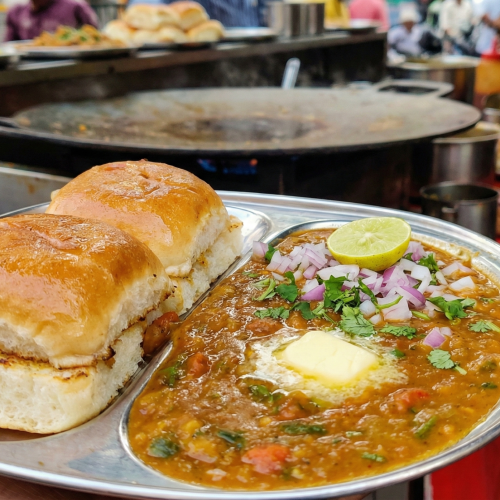
Few dishes capture the vibrant spirit of Mumbai like Pav Bhaji. Born as a quick meal for textile mill workers in the 19th century, this humble street food has grown into one of India’s most loved comfort dishes. It combines a buttery, spiced vegetable mash (bhaji) with soft bread rolls (pav) toasted until golden. The magic lies in its bold flavors, rich texture, and the irresistible aroma of spices sizzling in butter.
In this article, you’ll learn how to make authentic pav bhaji at home, with tips to enhance taste, texture, and presentation.
What is Pav Bhaji?
Pav Bhaji is a flavorful blend of mashed vegetables cooked with tomatoes, onions, and a special spice mix known as pav bhaji masala. It is served hot with butter-toasted pav, chopped onions, lemon wedges, and fresh coriander. The dish is simple, filling, and adaptable to personal taste.
Ingredients
For the Bhaji (Vegetable Mash)
- 3 medium potatoes (boiled and mashed)
- 1 cup cauliflower (finely chopped)
- ½ cup green peas
- 1 carrot (finely chopped)
- 1 capsicum (finely chopped)
- 2 large onions (finely chopped)
- 3 medium tomatoes (finely chopped or pureed)
- 2–3 green chilies (optional, finely chopped)
- 1 tablespoon ginger-garlic paste
- 2–3 tablespoons butter
- 1 tablespoon oil
- 2 teaspoons pav bhaji masala
- 1 teaspoon red chili powder (adjust to taste)
- ½ teaspoon turmeric powder
- Salt to taste
- 1 teaspoon lemon juice
- Fresh coriander leaves (chopped)
- Water as needed
For the Pav
- 8 pav (Indian bread rolls)
- 2 tablespoons butter
- A pinch of pav bhaji masala (optional)
Step-by-Step Method
Step 1: Prepare the Vegetables
Start by washing and chopping all vegetables finely. Smaller pieces cook faster and blend smoothly into the mash. Pressure cook the potatoes, cauliflower, peas, and carrot with a little water and salt until soft. You can also steam them if preferred. Once cooked, mash them well using a masher. Keep the mixture slightly chunky for texture.
Step 2: Build the Flavor Base
Heat a large flat pan or deep skillet on medium flame. Add butter and oil together. The oil prevents the butter from burning while preserving its rich taste.
Add chopped onions and sauté until they turn soft and light golden. Then add ginger-garlic paste and green chilies. Cook for a minute until the raw smell disappears.
Next, add chopped tomatoes and cook until they become soft and release oil from the sides. This step is crucial, as well-cooked tomatoes give depth and body to the bhaji.
Step 3: Add Spices
Now add turmeric powder, red chili powder, salt, and pav bhaji masala. Stir well. Let the spices cook for a minute so they release their aroma. If the mixture looks dry, sprinkle a little water.
Step 4: Combine and Mash
Add the mashed vegetables into the pan. Mix everything thoroughly. Using a masher, begin mashing the mixture directly in the pan while cooking. This creates the signature smooth yet slightly textured consistency.
Add water gradually to adjust thickness. Pav bhaji should be thick but not dry; it should spread easily without being watery.
Let it simmer for 10–15 minutes on low flame, stirring occasionally. Add a small cube of butter during the final simmer for extra richness.
Step 5: Add Finishing Touches
Add lemon juice and chopped coriander leaves. Mix well and taste. Adjust salt or spice if needed. If you like a stronger flavor, you can add a pinch more pav bhaji masala at the end.
Turn off the flame and keep the bhaji covered to retain heat.
Read Also: HOW TO MAKE CHOMINE
Toasting the Pav
- Heat a flat tawa or pan.
- Add butter and let it melt.
- Sprinkle a pinch of pav bhaji masala on the butter (optional but enhances flavor).
- Slice pav horizontally without cutting completely through.
- Place pav on the tawa and toast until golden and slightly crisp on both sides.
The pav should be soft inside and lightly crisp outside.
Serving Style
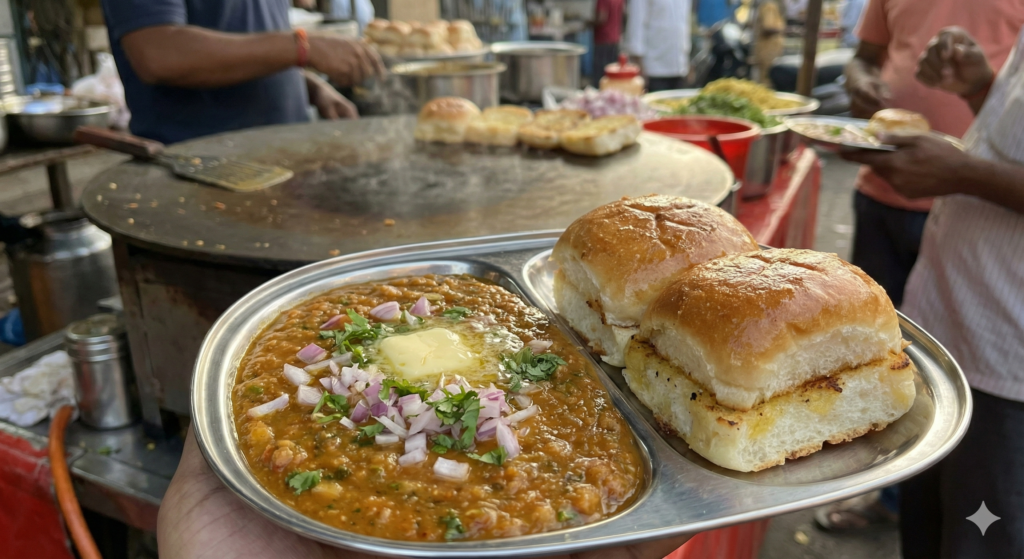
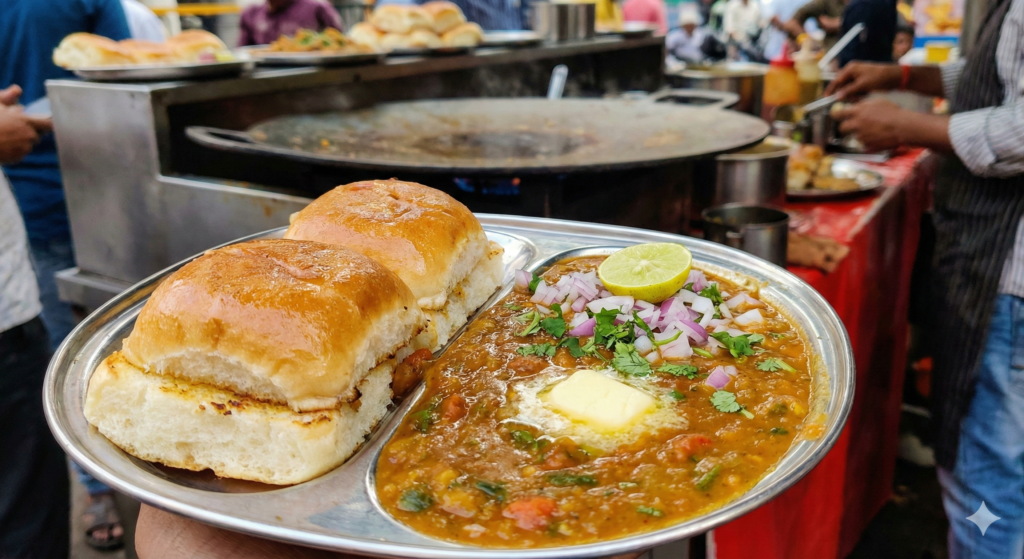
Serve hot bhaji in a bowl with a small cube of butter on top. Garnish with chopped onions and coriander. Place butter-toasted pav on the side along with lemon wedges.
For a street-style touch, serve on a steel plate with extra butter and a sprinkle of masala.
Tips for Perfect Pav Bhaji
- Use fresh butter generously: It enhances authentic taste.
- Mash well: The smoother the mash, the better the texture.
- Cook on a wide pan: Street vendors use large flat pans for even cooking and better flavor blending.
- Balance spice carefully: Pav bhaji should be flavorful but not overly spicy.
- Add capsicum at the right time: It gives a subtle aroma that defines classic pav bhaji.
Variations You Can Try
- Cheese Pav Bhaji: Add grated cheese on top before serving.
- Jain Pav Bhaji: Skip onion, garlic, and potatoes. Use raw banana instead.
- Khada Pav Bhaji: Keep vegetables slightly chunky instead of fully mashed.
- Paneer Pav Bhaji: Add grated paneer for extra richness.
Common Mistakes to Avoid
- Undercooking tomatoes, which can leave a sour taste.
- Adding too much water and making the bhaji thin.
- Skipping butter entirely (it changes the authentic flavor).
- Not simmering long enough for flavors to blend properly.
Nutritional Perspective
Pav bhaji contains a variety of vegetables, providing fiber, vitamins, and minerals. However, it also includes butter and bread, making it moderately high in calories. You can make a lighter version by reducing butter and using whole wheat pav.
Why Pav Bhaji is So Popular
The beauty of pav bhaji lies in its simplicity and adaptability. It can be made spicy or mild, rich or light. It suits family dinners, festive gatherings, and even casual parties. The combination of buttery bread and spicy vegetable mash creates a satisfying balance of textures and flavors.
Moreover, it brings a sense of nostalgia. Many people associate pav bhaji with street markets, evening outings, and celebrations. Making it at home allows you to recreate that joy in your own kitchen.
Final Thoughts
Pav bhaji is more than just a dish; it is an experience. With simple ingredients and the right technique, you can prepare restaurant-style pav bhaji at home. The key lies in patience while cooking and mashing the vegetables properly. Serve it hot with generous butter and enjoy it with family and friends.
Once you master this recipe, you’ll find yourself making it again and again — because few dishes deliver comfort and flavor as effortlessly as pav bhaji.