How to make Sarso ki sabzi?

Sarson ki sabzi, often lovingly called sarson ka saag, is a rustic North Indian dish made primarily from mustard greens and slow-cooked with spices. It is especially popular in the northern states of India during winter and is traditionally served with makki ki roti (cornmeal flatbread) and a dollop of white butter. Rooted deeply in Punjabi food culture, this comforting dish is famously associated with the region of Punjab and is considered a seasonal delicacy when fresh mustard greens flood local markets. This article walks you through a detailed, step-by-step method to prepare authentic sarson ki sabzi at home, along with helpful tips to enhance flavor and texture. Understanding Sarson (Mustard Greens) Mustard greens have a slightly bitter, peppery taste that mellows beautifully when slow-cooked. Traditionally, sarson ki sabzi isn’t made from mustard leaves alone. Many households combine: This blend balances bitterness, adds body, and creates a smoother texture. Ingredients (Serves 4) For the greens: For thickening: For tempering (tadka): Step-by-Step Preparation Step 1: Cleaning the Greens Mustard greens often carry soil and grit. Rinse them thoroughly in running water, then soak in a large bowl for a few minutes. Repeat until the water runs clear. Proper cleaning ensures a smooth final dish. Chop the greens roughly; they will shrink significantly during cooking. Step 2: Cooking the Greens In a deep pot or pressure cooker, add: If using a pressure cooker, cook for 3–4 whistles on medium heat. If cooking in an open pot, simmer covered for 40–50 minutes until the leaves are completely soft and tender. Slow cooking is essential. It reduces bitterness and develops depth of flavor. Step 3: Blending or Mashing Traditionally, sarson ki sabzi is hand-mashed using a wooden whisk (called mathani). This gives it a coarse, rustic texture. You may also: Step 4: Adding Maize Flour Dissolve maize flour in 2–3 tablespoons of water to form a smooth paste. Add this mixture to the cooked greens and simmer for 10–15 minutes on low heat. This step: Stir continuously to avoid lumps. Step 5: Preparing the Tadka (Tempering) Heat ghee in a small pan. Add: Sauté until the garlic turns golden and aromatic. Pour this hot tempering over the simmering greens. The sizzling sound and rising aroma signal that your sarson ki sabzi is nearly ready. Final Simmer Let everything cook together for another 5 minutes. Taste and adjust salt if necessary. The sabzi should be: Serving Suggestions Sarson ki sabzi is best enjoyed hot with: In Punjabi households across India, this dish is more than just food—it is a winter ritual, often prepared in large batches for family gatherings. Tips for Authentic Flavor 1. Use Fresh Winter Greens The best sarson ki sabzi is made during peak winter when mustard leaves are tender and less bitter. 2. Slow Cook for Depth Rushing the cooking process may leave bitterness intact. Gentle simmering creates a mellow, earthy flavor. 3. Don’t Skip the Ghee While you can substitute oil, ghee provides richness and authentic taste. 4. Balance Bitterness If the sabzi tastes slightly bitter: Nutritional Benefits Mustard greens are rich in: The combination of greens makes this dish nourishing, warming, and ideal for colder months. Variations You Can Try Punjabi Dhaba Style Add extra garlic and finish with a spoon of fresh cream for a richer taste. Vegan Version Replace ghee with mustard oil or neutral cooking oil. Spicier Version Add red chili powder or more green chilies for extra heat. Common Mistakes to Avoid Cultural Significance Sarson ki sabzi holds a special place in Punjabi heritage. During the harvest festival of Lohri and winter months, families gather around warm kitchens to prepare this slow-cooked delicacy. The dish symbolizes agricultural abundance and rural simplicity. It is also a staple in roadside eateries across northern India, where it is served piping hot with freshly made flatbreads straight off a clay tandoor. Conclusion Sarson ki sabzi is not merely a curry; it is a celebration of seasonal produce and traditional cooking methods. With simple ingredients and patient simmering, you can recreate this Punjabi classic in your own kitchen. The key lies in fresh greens, slow cooking, and generous tempering. Once mastered, this hearty dish will become a comforting addition to your winter meal rotation. Enjoy your homemade sarson ki sabzi with warm makki ki roti and a touch of butter for the full authentic experience.

Top places to visit in Bikaner……?

Bikaner, often called the “Camel Country,” is a vibrant desert city in Rajasthan that offers a perfect blend of history, architecture, and spicy culinary delights. Established in 1488 by Rao Bika, the city has managed to preserve its medieval charm through its towering forts and narrow, winding lanes. Below is a detailed guide to the top 10 places to visit in Bikaner, along with their unique stories and visual descriptions. 1. Junagarh Fort: The Unconquered Bastion Unlike most forts in Rajasthan which were built on hilltops, Junagarh Fort was constructed on the desert plains. Built in 1594 by Raja Rai Singh, the fort is a massive complex of palaces, temples, and pavilions. { “prompt”: “A wide-angle, cinematic photograph of Junagarh Fort in Bikaner during the golden hour. The massive red sandstone walls and intricate carvings are illuminated by the setting sun. In the foreground, there are traditional Rajasthani patterns on the ground, and the sky is a deep orange and purple.” } 2. Karni Mata Temple (The Rat Temple) Located about 30 km from Bikaner in Deshnoke, the Karni Mata Temple is world-famous—and perhaps a bit polarizing—due to the 25,000 black rats (kabbas) that live and are worshipped here. { “prompt”: “A close-up shot of the ornate silver gates of the Karni Mata Temple in Deshnoke, Bikaner. The marble carvings around the entrance are intricate. A few small rats are visible near the threshold where devotees offer milk in large metal bowls.” } 3. Lallgarh Palace and Museum Commissioned by Maharaja Ganga Singh in memory of his father, Lallgarh Palace is a masterpiece of the Indo-Saracenic style. It was built between 1902 and 1926. { “prompt”: “A grand architectural photograph of Lallgarh Palace in Bikaner. The red sandstone building features beautiful latticed windows and balconies. The lush green lawns in front are perfectly manicured, with a few peacocks walking in the distance under a clear blue sky.” } 4. Rampuria Haveli: The Pride of Bikaner The Rampuria Havelis are a group of seven houses built by the wealthy Rampuria merchant family. These are often cited as the “pride of Bikaner” due to their sheer aesthetic beauty. { “prompt”: “A perspective shot looking down a narrow street in Bikaner flanked by the red sandstone Rampuria Havelis. The intricate stone carvings and traditional balconies (jharokhas) create a repetitive, beautiful pattern. The light creates deep shadows and bright highlights on the red stone.” } 5. National Research Centre on Camel You can’t visit “Camel Country” without stopping at Asia’s largest camel breeding farm. Located 8 km from the city, the NRCC is both an educational and fun experience. { “prompt”: “A group of majestic Bikaneri camels at the National Research Centre on Camel. The sun is setting in the background over the semi-arid desert landscape. A researcher in traditional Rajasthani attire is tending to a baby camel in the foreground.” } 6. Bhandasar Jain Temple This is arguably the most beautiful temple in Bikaner. Dedicated to the 5th Tirthankara, Sumatinath, it is famous for its vibrant interiors and a very greasy legend. { “prompt”: “The interior of Bhandasar Jain Temple showing vibrant gold-leaf paintings and colorful frescoes on the pillars and ceiling. The architecture is a mix of red sandstone and white marble, with intricate mirror work reflecting the light.” } 7. Gajner Palace and Wildlife Sanctuary Often called an “oasis in the desert,” Gajner Palace sits on the banks of Gajner Lake. It was once the hunting lodge for the Bikaner Maharajas. { “prompt”: “A serene lakeside view of Gajner Palace in Bikaner. The red sandstone palace is reflected perfectly in the still waters of Gajner Lake. In the foreground, a few blackbucks are grazing near the water’s edge under the shade of ancient trees.” } 8. Devi Kund Sagar: The Royal Cenotaphs Located 8 km from Bikaner, Devi Kund Sagar is the royal crematorium of the Bika dynasty. It is a cluster of stunning cenotaphs (chhatris) built in memory of the rulers. { “prompt”: “A row of white marble and red sandstone cenotaphs (chhatris) at Devi Kund Sagar. The domes are intricately carved and stand against a dramatic sunset sky. The architecture reflects the grandeur of the Rathore rulers of Bikaner.” } 9. Prachina Museum Located within the Junagarh Fort complex, the Prachina Museum was established by Princess Rajyashree Kumari to preserve the cultural identity of Bikaner. { “prompt”: “An exhibit inside the Prachina Museum showing royal Rajasthani costumes on mannequins. The room is decorated with vintage furniture, European-style chandeliers, and portraits of Bikaner’s past rulers on the walls.” } 10. Laxmi Niwas Palace While now a premier luxury hotel, Laxmi Niwas Palace (a part of the Lallgarh complex) is an architectural wonder that visitors can explore or dine in. { “prompt”: “The grand central courtyard of Laxmi Niwas Palace at night, illuminated by golden floodlights. The intricate stone carvings of the balconies and the red sandstone arches create a romantic, royal atmosphere. Fire torches are lit along the walkways.”

Top 10 places to visit in Ranthambor

Top 10 places to Visit in Ranthambore

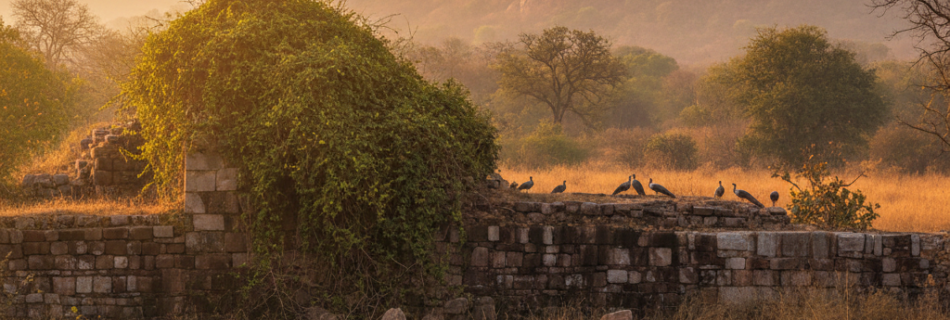
In this article we are going to discuss about top 10 places to visit in Ranthambore, nestled in the royal state of Rajasthan, Ranthambore is a captivating blend of wildlife, history, and natural beauty. Once the private hunting grounds of the Maharajas of Jaipur, this region is now one of India’s most celebrated wildlife destinations. From majestic tigers roaming freely in the wild to ancient forts and serene lakes, Ranthambore offers an unforgettable experience for nature lovers, photographers, history enthusiasts, and spiritual seekers alike. Here are the top 10 places to visit in Ranthambore that should be on every traveler’s itinerary. 1. Ranthambore National Park The crown jewel of the region, Ranthambore National Park is one of India’s largest and most famous national parks. Spread across approximately 1,334 square kilometers, the park is renowned for its healthy population of Royal Bengal Tigers. Unlike many other reserves, the tigers here are known for their relatively frequent daytime sightings, making it a paradise for wildlife photographers. The park is divided into multiple safari zones, each offering a unique landscape of dry deciduous forests, open grasslands, rocky hills, and scenic lakes. Apart from tigers, you can spot leopards, sloth bears, striped hyenas, marsh crocodiles, sambar deer, chital, nilgai, and over 300 species of birds. A jeep or canter safari through this rugged terrain is an exhilarating experience that brings you face-to-face with nature in its rawest form. 2. Ranthambore Fort Standing majestically atop a hill within the national park, Ranthambore Fort is a UNESCO World Heritage Site and a symbol of Rajasthan’s glorious past. Built in the 10th century by the Chauhan rulers, the fort has witnessed numerous battles and sieges over the centuries. The climb to the fort is as rewarding as the destination itself. Along the way, you’ll pass ancient gateways, crumbling walls, and panoramic viewpoints offering sweeping vistas of the forest below. Inside the fort complex, you’ll find temples, stepwells, and palaces that echo stories of valor and resilience. The combination of history and natural surroundings makes this fort a must-visit landmark. 3. Padam Talao Padam Talao is the largest lake in Ranthambore National Park and one of its most picturesque spots. The lake is often the backdrop for iconic tiger photographs, especially when a tiger is seen cooling off in the water during the hot summer months. At the edge of the lake stands the beautiful Jogi Mahal, a historic forest rest house with a massive banyan tree nearby—considered one of the largest in India. The reflection of the surrounding hills and ruins in the tranquil waters of Padam Talao creates a mesmerizing scene, especially during sunrise and sunset. 4. Rajiv Gandhi Regional Museum of Natural History For those who want to understand the region’s biodiversity and conservation efforts more deeply, the Rajiv Gandhi Regional Museum of Natural History is an excellent stop. The museum features informative exhibits on Rajasthan’s flora, fauna, geology, and tribal culture. Interactive displays, life-sized models of animals, and educational galleries make it an engaging experience for both adults and children. Visiting the museum before heading out on a safari can enrich your understanding of the ecosystem you’re about to explore. 5. Surwal Lake Located a short drive from Ranthambore, Surwal Lake is a hidden gem, particularly popular among birdwatchers. During the winter months, the lake becomes a haven for migratory birds such as flamingos, pelicans, painted storks, and spoonbills. The peaceful surroundings and rural landscape make it an ideal spot for photography and quiet reflection. Early morning visits offer the best chance to witness flocks of birds gliding over the shimmering waters as the sun rises. 6. Malik Talao Malik Talao is another scenic lake inside Ranthambore National Park. Smaller than Padam Talao, this water body is known for frequent wildlife sightings, especially crocodiles basking along the banks. The lake attracts a variety of birds and herbivores, making it a hotspot for safari-goers. The surrounding landscape, dotted with ancient ruins and dense vegetation, adds to its charm. It’s one of the best locations in the park to observe the delicate balance of predator and prey in action. 7. Kachida Valley Situated on the outskirts of the main park area, Kachida Valley is known for its rugged terrain and rocky outcrops. This area is particularly famous for leopard sightings, as the elusive cats prefer the hilly landscape away from the dominant tigers. The valley also supports a population of sloth bears and various species of deer. The dramatic scenery, combined with the thrill of spotting rare wildlife, makes Kachida Valley an exciting destination for safari enthusiasts. 8. Trinetra Ganesh Temple Located within the Ranthambore Fort complex, the Trinetra Ganesh Temple is one of the oldest temples dedicated to Lord Ganesha in Rajasthan. The temple holds immense religious significance and attracts thousands of devotees each year. The idol here is unique, as it depicts Lord Ganesha with three eyes (Trinetra). During festivals like Ganesh Chaturthi, the temple comes alive with vibrant celebrations and rituals. Even for non-devotees, the spiritual ambiance and historical setting make it worth a visit. 9. Jogi Mahal Situated near Padam Talao, Jogi Mahal is a historic structure that once served as a hunting lodge for the royal family. Although entry inside the building is restricted, the exterior architecture and its scenic location make it a popular attraction. The massive banyan tree in front of Jogi Mahal is a highlight, drawing attention for its sprawling canopy and impressive age. The area offers excellent photo opportunities, especially with the lake and fort in the background. 10. Sawai Madhopur No visit to Ranthambore is complete without exploring Sawai Madhopur, the town that serves as the gateway to the national park. The town offers a glimpse into rural Rajasthani life, colorful markets, and traditional cuisine. You can shop for local handicrafts, textiles, and souvenirs, or savor authentic Rajasthani dishes like dal baati churma and gatte ki sabzi. The town’s warm hospitality and cultural vibrancy provide a delightful contrast to the wilderness adventures inside the park. …

how to make chole bhature

How to make Chola Bhatur?

Chapter 1: The Soul of the Chole – The Chickpea Curry Our story begins with the chole, the very soul of this dish. The secret to a rich, flavorful chole lies in patience and a blend of aromatic spices. Ingredients for Chole: The Tale Unfolds: And so, the first chapter of our culinary story concludes, with a pot of fragrant, spicy chole ready to tantalize your taste buds. Chapter 2: The Fluffy Dream – The Bhatura Now, let’s turn our attention to the bhatura, the perfect companion to our chole. This leavened bread is known for its light, airy texture and slightly tangy flavor. Read also :How to make samosa at home? Ingredients for Bhatura: The Dream Takes Shape: Chapter 3: The Grand Finale – Frying the Bhatura The climax of our story involves the magical transformation of dough into golden, puffy bhaturas. Repeat the process with the remaining dough balls. Chapter 4: The Grand Feast – Serving Chole Bhature Our story culminates in a grand feast. Serve the hot, fluffy bhaturas immediately with the spicy chole. Accompaniments: This culinary masterpiece, Chole Bhature, is more than just a dish; it’s an experience that awakens the senses and tells a tale of tradition, flavor, and pure gastronomic delight. Enjoy every bite of this labor of love!