How your own blood holds the secret to younger-looking skin and fuller hair — and what to expect before, during, and after treatment.
Imagine if your body already carried everything it needed to heal, rejuvenate, and rebuild — right inside your bloodstream. That is not a marketing slogan. That is the premise behind Platelet-Rich Plasma (PRP) therapy, one of the most talked-about cosmetic treatments of the past decade — and for genuinely good reasons.
PRP has moved from sports medicine clinics (you may remember athletes using it for joint injuries) into the world of aesthetics, where it is now used to address thinning hair, ageing skin, uneven texture, and even acne scars. What makes it compelling is simple: it uses your own biology, not a foreign substance, to spark change from within.
What Exactly Is PRP?
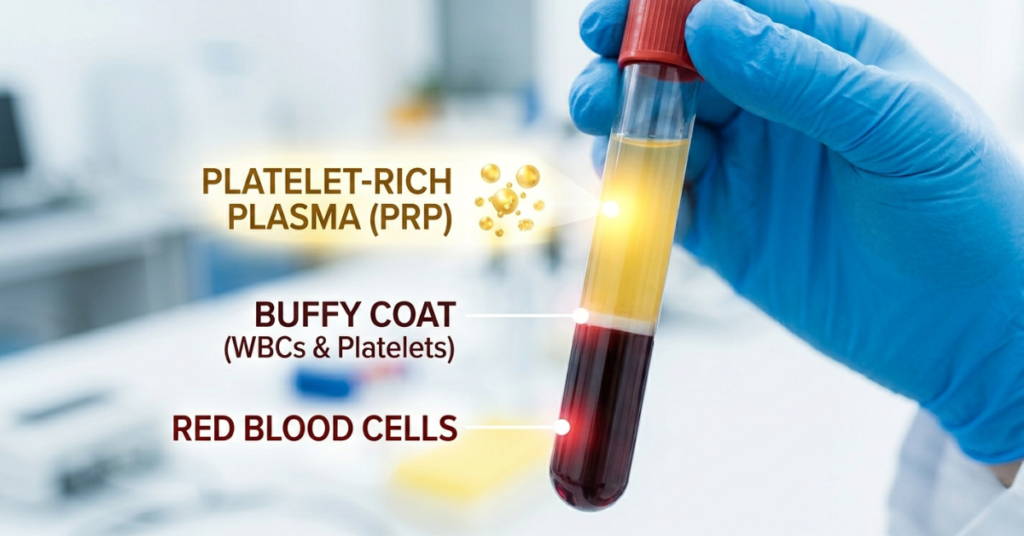
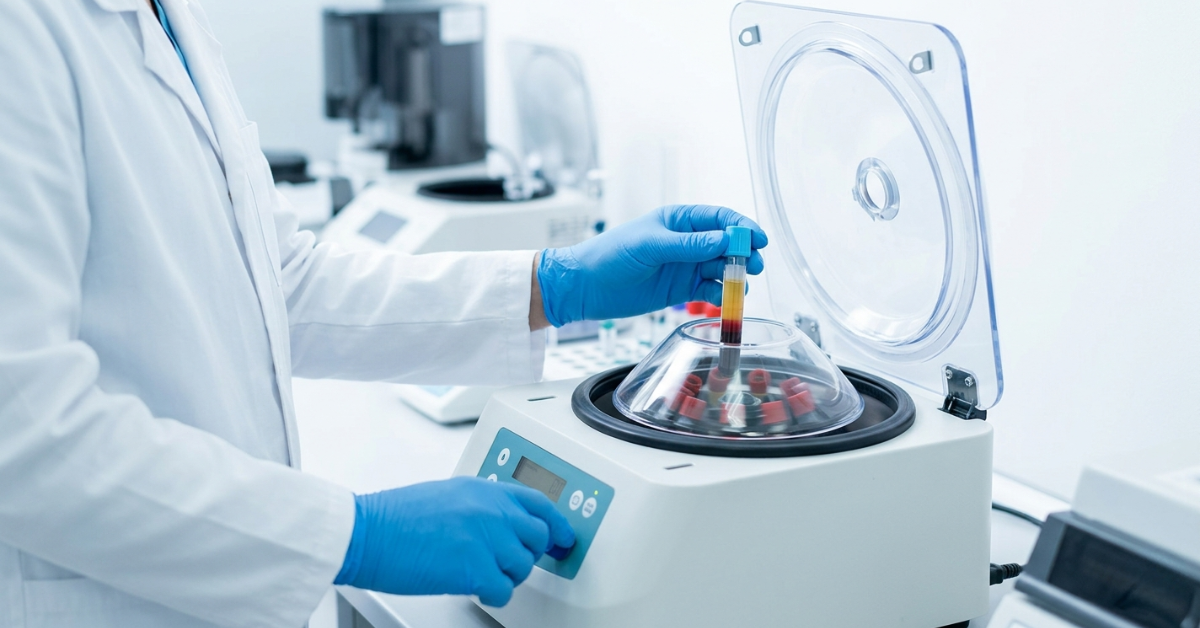
Platelet-Rich Plasma is derived from your own blood. A small sample — typically 10 to 30 ml — is drawn and placed in a centrifuge machine that spins at high speed, separating the blood into its components: red blood cells, white blood cells, and plasma. The layer that emerges richest in platelets is the gold we are after.
Platelets are tiny cell fragments whose primary job in the body is to stop bleeding and trigger the healing process. They do this by releasing growth factors — signalling proteins that instruct surrounding cells to regenerate, produce collagen, and repair tissue damage. In cosmetic PRP, this concentrated growth factor cocktail is injected or micro-needled directly into target areas, essentially telling your skin or scalp: “It is time to rebuild.”
PRP for Skin Rejuvenation
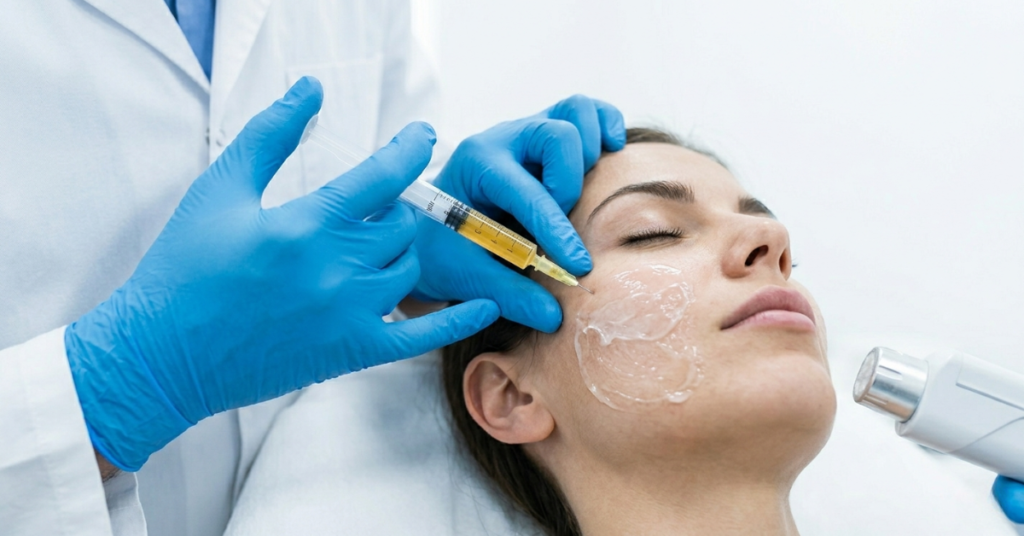
The skin benefits of PRP stem from its ability to dramatically boost collagen production — the structural protein that keeps skin firm and plump. As we age, collagen production slows, leading to fine lines, loss of elasticity, and a dull complexion. PRP injections or micro-needling with PRP can reverse some of this decline, offering:
Improved skin texture
Smoother, more even surface tone with reduced pore visibility over multiple sessions.
Collagen boost
Stimulates fibroblasts to produce fresh collagen, restoring firmness and reducing fine lines.
Scar reduction
Accelerates healing in acne scar tissue, improving both depth and discolouration.
Under-eye revival
Reduces dark circles and hollowness in the tear trough, a notoriously tricky area.
What sets PRP apart from synthetic fillers or chemical peels is that it works with your skin’s own biology rather than introducing something foreign. The result tends to look natural — a refreshed version of you, rather than an overdone one.
PRP for Hair Loss: A Follicular Renaissance
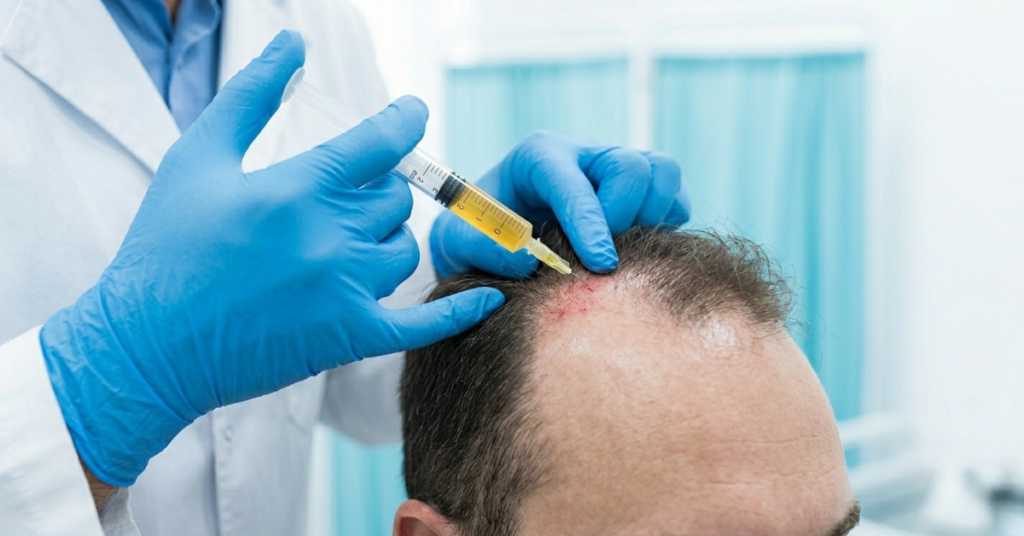
Perhaps the area where PRP has earned the most clinical attention is androgenetic alopecia — the pattern baldness that affects both men and women. PRP for hair loss, often called “scalp PRP,” involves injecting the growth factor-rich plasma directly into the scalp at the level of the hair follicles.
The growth factors stimulate dormant follicles back into their active growth phase (anagen), increase blood supply to existing follicles, and strengthen the hair shaft itself. Clinical studies have shown meaningful increases in hair density and thickness after three to four monthly sessions, with maintenance treatments recommended every four to six months thereafter.
PRP is most effective for those in the early to mid stages of hair loss and works best when the follicle is weakened but not completely destroyed. It is not a cure for complete baldness, but as a preventative and restorative measure, it delivers genuinely visible results for the right candidates.
What Happens During a PRP Session?
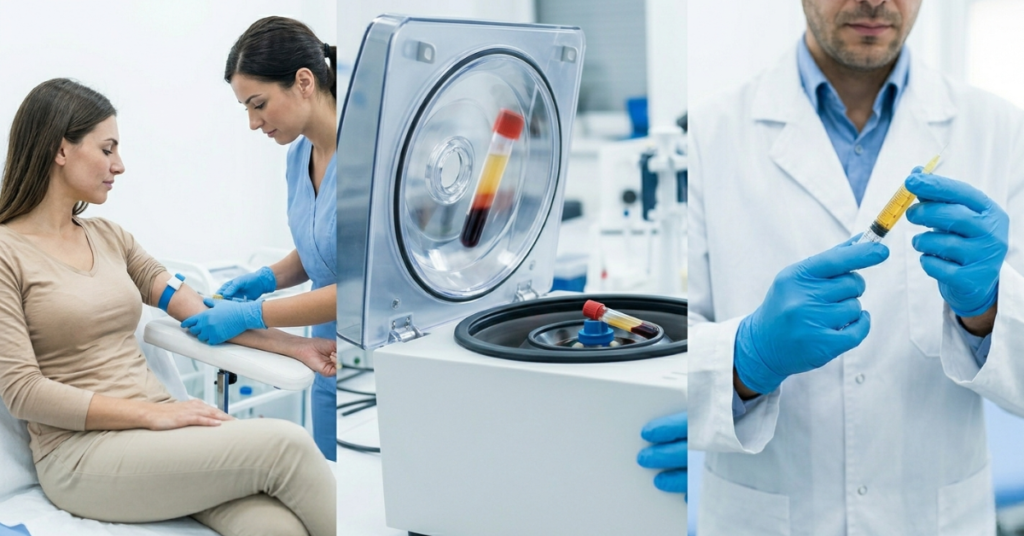
Understanding the process demystifies it — and most people are pleasantly surprised by how straightforward it is.
- Consultation & Assessment — Your doctor evaluates your skin or scalp condition, medical history, and goals. This determines whether PRP is suitable and how many sessions are recommended.
- Blood Draw — A small amount of blood (similar to a routine test) is taken from your arm using a sterile needle and collection tube.
- Centrifugation — The blood sample is placed in a centrifuge for roughly 10 minutes, separating the platelet-rich plasma layer from other components.
- Activation (optional) — Some protocols add a small amount of calcium chloride or thrombin to activate the platelets before injection, intensifying the growth factor release.
- Application — The PRP is either injected via fine needles into the target area, or used in combination with micro-needling to drive it deeper into skin tissue.
- Post-treatment care — Minimal downtime. Some mild redness or sensitivity for 24–48 hours is normal. Sunscreen and gentle skincare are advised immediately after.
Who Is the Ideal Candidate for PRP?
PRP is broadly safe for most healthy adults because it uses your own blood, which eliminates the risk of allergic reaction. That said, certain conditions warrant caution or exclusion:
Ideal candidates are generally in good overall health, non-smokers (or minimal smokers), not on blood thinners, and free of platelet dysfunction disorders or active infections. Pregnant or breastfeeding individuals are advised to wait. Your treating physician will screen carefully during consultation.
The treatment works best as part of a consistent skincare or hair care plan — not as a one-off quick fix. Patience is key: most skin improvements become visible 4–6 weeks post-treatment, while hair regrowth timelines typically run 3–6 months after completing the initial course.
Frequently Asked Questions
Is PRP treatment painful?
Most clinics apply a topical numbing cream 30–45 minutes before the procedure. Scalp injections may cause brief discomfort, but the majority of patients describe the sensation as mild and entirely manageable.
How many sessions will I need?
For hair loss, the standard protocol is 3–4 monthly sessions followed by maintenance every 4–6 months. For skin rejuvenation, 3 sessions spaced 4 weeks apart is the typical starting point, with annual maintenance thereafter.
Are the results permanent?
PRP stimulates your body’s natural processes — it does not freeze time. Results are long-lasting but not permanent. Maintenance sessions sustain the benefits, and lifestyle factors like diet, stress management, and sun protection play a supporting role.
Can PRP be combined with other treatments?
Yes. PRP is frequently combined with micro-needling for enhanced skin absorption, with mesotherapy for scalp health, or used alongside dermal fillers as a complementary protocol. Your specialist will advise on the best combination for your goals.
The Bigger Picture: Why PRP Fits the Future of Aesthetics
Modern cosmetic medicine is shifting — away from heavy interventions and toward treatments that support the body’s own intelligence. PRP fits squarely in this direction. It is not about masking ageing; it is about giving your cells the signal to do what they were always capable of.
As techniques improve, centrifuge technology advances, and clinical evidence accumulates, PRP is moving from niche offering to foundational aesthetic treatment. Whether you are exploring it for a more confident complexion, addressing hair thinning that has quietly bothered you for years, or simply curious about what your body’s own biology can achieve — the conversation is worth starting.
And the best place to start that conversation is with a qualified specialist who will assess your unique needs honestly, without overselling outcomes.
Ready to Explore PRP for Yourself?
Book a consultation with Dr. Priyanka Goyal at UPCHAAR Hair, Skin & General Hospital for a personalised assessment.
📸 Follow Us on Instagram