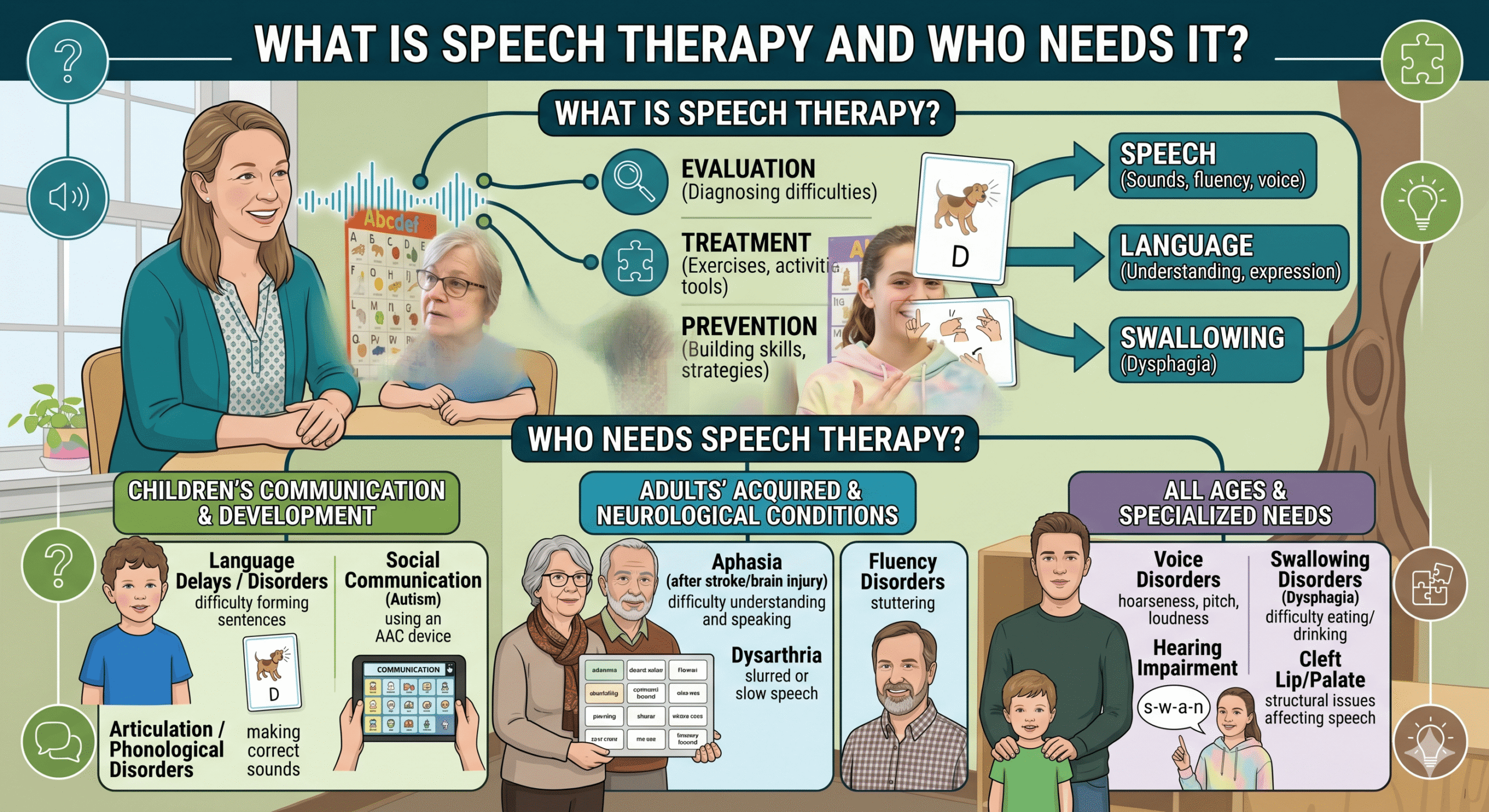
Communication is one of the most important parts of human life. From expressing emotions to sharing ideas, speech helps people connect with the world around them. However, not everyone finds speaking or understanding language easy. Some children struggle to pronounce words clearly, while adults may face communication difficulties after an illness or injury. This is where speech therapy plays an important role.
Speech therapy is a specialized treatment that helps individuals improve their speech, language, communication, and swallowing abilities. It is designed for people of all ages, from toddlers to older adults, and can significantly improve confidence, social interaction, and quality of life
What Is Speech Therapy?
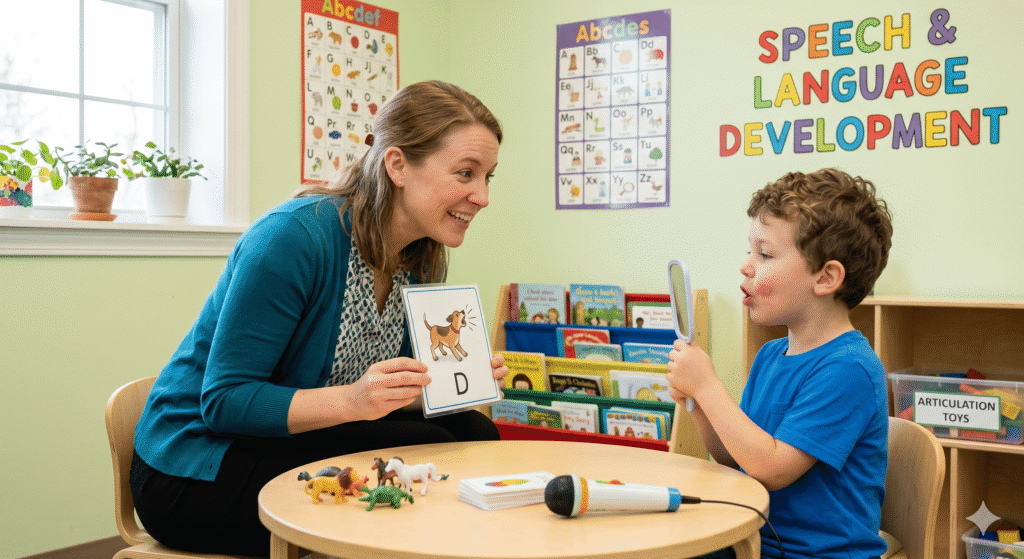
Speech therapy is a healthcare service that focuses on diagnosing and treating communication disorders. It is provided by trained professionals called speech-language pathologists (SLPs), also known as speech therapists.
Speech therapy helps individuals who have difficulties with:
- Speaking clearly
- Understanding language
- Expressing thoughts
- Pronouncing words
- Voice control
- Fluency (stuttering)
- Social communication
- Swallowing and feeding
The goal of speech therapy is to improve communication skills so individuals can communicate more effectively in daily life.
How Does Speech Therapy Work?
Speech therapy programs are personalized according to the individual’s age, condition, and communication needs. During the first session, the speech therapist performs an assessment to identify the specific issue and create a treatment plan.
Therapy may include:
1. Speech Exercises
These exercises help improve pronunciation, mouth movement, and clarity of speech.
2. Language Activities
Activities such as storytelling, naming objects, and answering questions help improve vocabulary and sentence formation.
3. Breathing and Voice Techniques
Voice therapy focuses on controlling pitch, tone, and breathing patterns.
4. Fluency Training
Special techniques are used to help individuals who stutter speak more smoothly.
5. Oral-Motor Therapy
Exercises strengthen the muscles used for speaking and swallowing.
6. Play-Based Therapy for Children
For young children, therapists often use games, toys, songs, and interactive activities to make learning enjoyable.
Speech therapy sessions can take place in clinics, hospitals, schools, rehabilitation centers, or online through teletherapy.
Common Types of Speech and Language Disorders
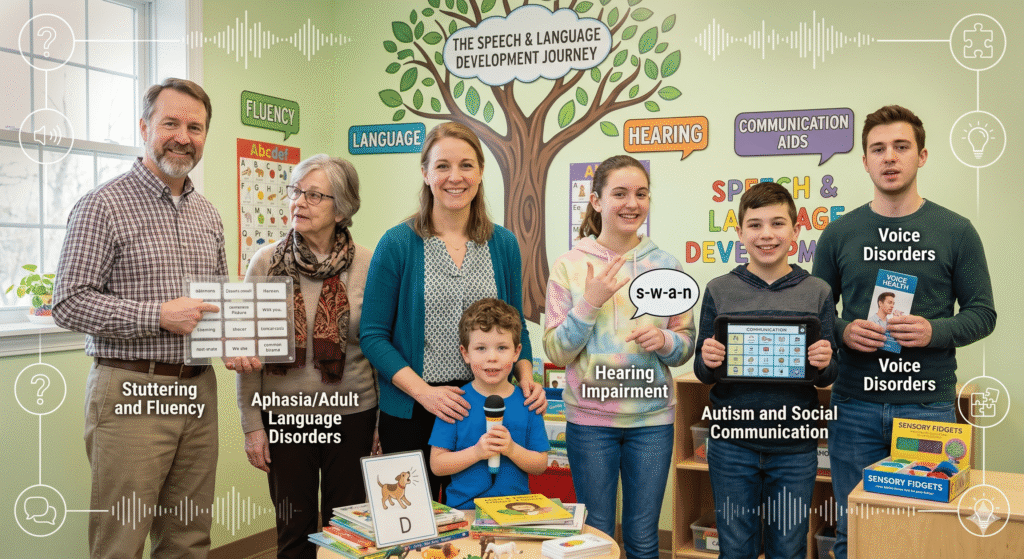
Speech therapy can treat a wide range of communication disorders. Some of the most common include:
1. Articulation Disorders
These occur when a person has difficulty pronouncing sounds correctly. For example, saying “wabbit” instead of “rabbit.”
2. Language Disorders
A language disorder affects a person’s ability to understand or use words properly.
3. Fluency Disorders
Stuttering is the most common fluency disorder. It causes interruptions in the natural flow of speech.
4. Voice Disorders
People with voice disorders may have hoarseness, unusual pitch, or vocal strain.
5. Apraxia of Speech
This neurological disorder affects the brain’s ability to coordinate speech movements.
6. Dysarthria
This condition causes weak speech muscles, often due to neurological conditions like stroke or Parkinson’s disease.
7. Social Communication Disorders
Some individuals struggle with social interactions, body language, and conversational skills.
8. Swallowing Disorders
Speech therapists also help people who have trouble chewing or swallowing food safely.
Who Needs Speech Therapy?
Speech therapy is beneficial for both children and adults experiencing communication challenges.
Children Who May Need Speech Therapy
Children develop speech and language skills at different rates. However, certain signs may indicate the need for professional support.
Signs in Toddlers and Young Children
A child may benefit from speech therapy if they:
- Do not speak by the expected age
- Have limited vocabulary
- Struggle to form sentences
- Cannot follow simple instructions
- Mispronounce many words
- Stutter frequently
- Have difficulty interacting socially
- Show frustration while communicating
Early intervention is very important because children learn language skills rapidly during their early years.
Conditions in Children That Often Require Speech Therapy
Autism Spectrum Disorder (ASD)
Many children with autism experience communication and social interaction difficulties.
Hearing Impairment
Children with hearing loss may struggle to develop clear speech.
Developmental Delays
Speech therapy helps children who develop communication skills later than expected.
Cleft Lip and Palate
Structural differences in the mouth can affect speech production.
Learning Disabilities
Some learning disorders impact language understanding and expression.
Childhood Apraxia of Speech
Children with this condition know what they want to say but struggle to coordinate speech movements.
Adults Who May Need Speech Therapy
Speech therapy is not only for children. Adults can also experience communication difficulties due to medical conditions, injuries, or aging.
Stroke Survivors
A stroke can affect the brain areas responsible for speech and language.
Parkinson’s Disease
Parkinson’s may cause reduced voice volume and unclear speech.
Brain Injuries
Traumatic brain injuries can impact memory, communication, and swallowing abilities.
Voice Problems
Teachers, singers, public speakers, and professionals who use their voice extensively may develop voice disorders.
Stuttering in Adults
Some adults continue to stutter or develop fluency issues later in life.
Dementia and Alzheimer’s Disease
These conditions may affect language and communication skills over time.
Post-Surgery Recovery
People recovering from throat or oral surgeries may need speech therapy for rehabilitation.
Benefits of Speech Therapy
Speech therapy offers many emotional, social, and educational benefits.
Improved Communication
People learn to express themselves more clearly and confidently.
Better Academic Performance
Children with strong communication skills often perform better in school.
Increased Confidence
Clear communication improves self-esteem and reduces frustration.
Enhanced Social Skills
Speech therapy helps individuals interact more effectively with others.
Improved Quality of Life
Being able to communicate needs, thoughts, and emotions improves independence and relationships.
Safer Swallowing
Therapy can reduce the risk of choking and improve eating abilities.
Importance of Early Intervention
One of the most important aspects of speech therapy is early intervention. The earlier communication difficulties are identified, the more effective therapy can be.
Young children’s brains are highly adaptable, making it easier for them to develop new communication skills. Delaying therapy may lead to challenges in learning, behavior, and social interaction later in life.
Parents, teachers, and caregivers should pay attention to speech milestones and seek professional guidance if they notice delays.
What Happens During a Speech Therapy Session?
A typical speech therapy session depends on the individual’s goals and age.
For Children
Sessions may include:
- Flashcards
- Storytelling
- Singing songs
- Word games
- Pronunciation exercises
- Interactive play activities
For Adults
Sessions may focus on:
- Speech clarity
- Voice control
- Cognitive communication
- Breathing techniques
- Swallowing exercises
Therapists also provide home practice activities to help individuals continue improving outside therapy sessions.
Can Speech Therapy Be Done at Home?
Professional guidance is essential, but parents and caregivers can support speech development at home.
Here are a few helpful tips:
- Talk to children regularly
- Read books aloud
- Encourage conversations
- Limit excessive screen time
- Practice speech exercises daily
- Be patient and supportive
- Use positive reinforcement
Consistency and encouragement can greatly improve progress.
Online Speech Therapy: A Growing Trend
With advances in technology, online speech therapy has become increasingly popular. Virtual therapy sessions allow individuals to receive professional support from home.
Benefits of online speech therapy include:
- Convenience
- Flexible scheduling
- Access to specialists
- Comfortable home environment
- Reduced travel time
Online therapy can be especially helpful for families living in remote areas.
Common Myths About Speech Therapy
Myth 1: Speech Therapy Is Only for Children
Reality: Adults also benefit from speech therapy.
Myth 2: Children Will Outgrow Speech Problems
Reality: Some issues improve naturally, but many require professional support.
Myth 3: Speech Therapy Works Instantly
Reality: Progress takes time, consistency, and practice.
Myth 4: Speech Therapy Only Helps Speaking
Reality: It also improves language, communication, swallowing, and social skills.
How to Find a Speech Therapist
When choosing a speech therapist, consider:
- Qualifications and certification
- Experience with specific conditions
- Child-friendly or patient-friendly approach
- Online or in-person availability
- Reviews and recommendations
Consulting a pediatrician, doctor, or school counselor can also help you find the right professional.
Conclusion
Speech therapy is a valuable treatment that helps people overcome communication and swallowing difficulties. Whether it is a child struggling with pronunciation or an adult recovering from a stroke, speech therapy can improve confidence, independence, and overall quality of life.
Communication is essential for learning, relationships, and emotional well-being. Identifying speech and language challenges early and seeking professional support can make a lasting positive impact.
If you or someone you know is experiencing communication difficulties, consulting a speech therapist may be the first step toward clearer and more confident communication.